
Beware of soda crackers: 5 hidden calorie traps
Mar 31, 2026
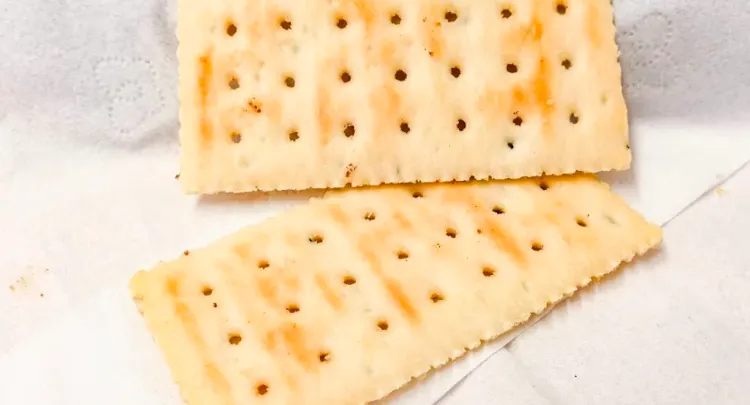
Author: Wang Xiaohui, Associate Senior Engineer in the Field of Food Science. Review Expert: Wang Xiaohui. Source: Douyin @Tianyuan Xiaoxiao Cloud video screenshot. Recently, a video showing how to make soda crackers has sparked a flurry of discussions online. Many people have long believed that soda crackers are light, sugar-free, and crispy, making them an ideal snack for cravings. However, the irresistible crispy texture is actually due to the subtle contribution of salad oil behind the scenes.
Isn't it said that low-calorie and healthy foods can also be good for the stomach? How did I end up consuming so much grease without noticing? How can we avoid these calorie traps? The True Face of Soda Crackers. Soda crackers have always given people the impression of being 'gentle on the stomach,' 'light,' and 'burden-free.' With their crispy texture and a flavor that is neither sweet nor greasy, many people tend to bring a pack along while hiking or exercising. They also snack on them during work when they feel hungry.
However, the problem lies precisely in this 'crispiness.' To achieve a crispy texture, fat is indispensable. Some soda crackers contain as much as 20 to 30 grams of fat per 100 grams, with a calorie content reaching 400 to 500 kcal, while 100 grams of rice has about 116 kcal. This means that eating a small pack of soda crackers can amount to the calorie equivalent of nearly two bowls of rice.
Another point is that it is small in size and has a weak satiating effect, making it easy for people to unknowingly eat several bags and exceed their calorie intake. Other common 'calorie traps.' Soda crackers are not the only 'calorie traps.' On the journey of weight loss, many foods marketed as 'light' or 'natural' actually contain a high amount of calories as well.
Dried fruit. After the moisture evaporates from fresh fruits, the sugars become highly concentrated, and the calorie content increases to three to five times that of the original. A handful of raisins can even equal the calorie content of an entire bunch of fresh grapes. Additionally, some dried fruits may have large amounts of sugar added during processing to ensure their sweet and tangy flavor.
Salad dressing. One tablespoon of salad dressing, approximately 20 grams, contains calories comparable to a small piece of cake. Many people pour dressing generously on their salads, turning a healthy meal into a calorie bomb.
Flavored yogurt. To enhance the taste, manufacturers often add a large amount of sugar and jam to flavored yogurt. A single serving of flavored yogurt can contain more sugar than a can of cola. Truly low-calorie yogurt should only have whole milk and cultures listed in the ingredients.
Fruit and Vegetable Crisps. The so-called 'non-fried' fruit and vegetable chips are mostly treated with low-temperature oil frying or oil roasting — they are treated with oil before dehydration in order to achieve a crispy effect.
Cold tossed vegetables. Cold dishes in takeout often use red oil for flavor enhancement. What may look like refreshing vegetarian options such as cucumbers and black fungus, once coated in red oil, are no longer low-calorie choices.
How to avoid 'calorie traps'? Don't treat them as meal replacements. Foods such as cookies, bread, flavored yogurt, and fruit and vegetable chips are ultimately high-calorie processed foods. During weight loss, it is not necessary to completely eliminate them, but they should not replace regular meals. One should prioritize maintaining a balanced diet across three meals, ensuring adequate intake of staple foods, proteins, and vegetables in order to truly reduce cravings for snacks.
Check the ingredient list. The promotional slogans on the front of the packaging are often marketing rhetoric, while the real information is hidden on the back. Pay special attention to these two pieces of data: the fat content per 100 grams and the caloric value. Be wary of foods with a fat content exceeding 20 grams. Labels such as 'low sugar,' 'stomach-friendly,' and 'non-fried' should only be taken as reference.
Choose these when you're hungry. When you feel like eating something, prioritize unsweetened yogurt, boiled eggs, cherry tomatoes, cucumbers, or plain milk. They are low in calories and very filling, so you won't feel like you have 'eaten nothing' after having them.
Add a note when placing an order. The healthiness of many so-called 'light meals' actually depends on how you season them. For cold dishes, you can specify 'only soy sauce and vinegar, no chili oil.' For salads, it's best to request the dressing on the side so you can control the amount, or choose a low-fat oil and vinegar dressing as a substitute.
Caring for the stomach requires caution. Some people choose to eat soda crackers because of stomach discomfort, believing that they can neutralize stomach acid. However, the high fat content in soda crackers may actually increase the burden on the stomach. If there are stomach health issues, it is advisable to seek medical attention promptly.
Light, simple, and with names that sound healthy, do not necessarily mean low in calories. Labels like 'low sugar,' 'non-fried,' and 'light food' are not incorrect in themselves, but many food promotions downplay the proportion of fats. When selecting foods, it's important to remain rational and vigilant, and not to be misled by advertising.
#health
#dietary habits


© 2025 Health Tribe.