
Director's Message on Advancing Sexual and Reproductive Health Rights
Mar 31, 2026
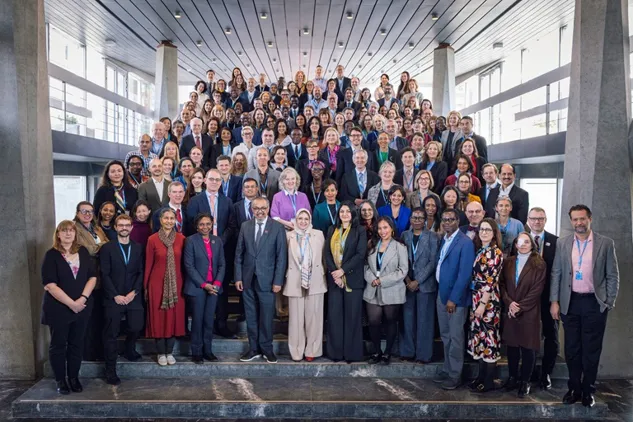
We are living in a time when the promises that once formed the basis of global cooperation are under strain, power is distorted, rules are bent, and a values-based order feels increasingly negotiable. The consequences are evident across health systems: care is denied, science is dismissed, services are disrupted, and rights are reduced to mere rhetoric. Health is viewed as optional, women's bodies are contested, and children's lives are at risk. In such a context, the effort to advance sexual and reproductive health and rights (SRHR) remains essential and urgently needed.
Throughout this turbulent period, we must recalibrate to ensure continued progress. Our efforts have been guided by three concentric commitments that anchor us.
The first is our circle of concern: the shifting political and financing landscape that profoundly shapes outcomes yet lies beyond our direct control. To navigate this volatility, we have strengthened policy intelligence, expanded our monitoring capacities, and produced targeted analyses to support timely and informed decision-making.
The second is our circle of influence: the realm where collaboration can alter paths, even when limitations arise. We have enhanced our interactions with WHO regional and country offices, UN cosponsors, civil society, and collaborating centers to align strategies, foresee risks, and maintain access to essential care in settings where policy options are increasingly constrained.
The third is our circle of control: the core work that defines our mandate to deliver rigorous evidence, set global norms and standards, and support countries in translating guidance into practical implementation. This is where scientific independence, technical excellence, and accountability intersect.
These commitments have translated into clear achievements in 2025, as detailed in our annual report. We consolidated global guidelines for the prevention, diagnosis, and treatment of postpartum hemorrhage, establishing a unified standard to address the leading cause of maternal mortality. We released authoritative guidance on managing diabetes and sickle-cell disease during pregnancy, effectively narrowing significant care quality gaps. We launched the first global guideline on infertility, highlighting a long-neglected equity issue impacting millions. Additionally, we enhanced digital reliability by introducing a client-facing content toolkit, empowering health services to counter misinformation with accurate and accessible information. Collectively, these advancements shift systems from fragmentation to clarity and from evidence to action.
Acknowledging that evidence alone does not lead to improved outcomes, we have also invested in translation. In collaboration with regional partners, we supported updates to minimum sexual and reproductive health and rights (SRHR) service packages and established costed standards to facilitate coherent budgeting, procurement, and training. We contributed to improved measurement frameworks, updated estimates of maternal mortality, and shared implementation stories that bring practical learning closer to frontline decision-makers, including in humanitarian settings. These efforts ensure that guidance is not only produced but also usable, scalable, and anchored in accountability.
The broader landscape remains challenging. Funding is more constrained, fragmented, and increasingly influenced by political conditionalities. While the push for expanded domestic financing is vital, many transitions are occurring amid austerity and debt burdens. Without careful design, such shifts risk redistributing vulnerability rather than addressing it, forcing an unnecessary choice between investment in sexual and reproductive health and rights (SRHR) and other health priorities, between commitment to prevention and acute response, and across already marginalized populations. Simultaneously, growing interest in private-sector engagement presents both opportunities and risks. Clear guardrails are essential: alignment with rights-based public health goals, transparency in financing, protections against exclusion, and a firm expectation that private engagement must strengthen rather than replace public systems.
A central concern moving forward is the widening gap between existing evidence and the realities it must address, particularly in fragile and conflict-affected settings, where needs are greatest and data are scarce. The task ahead requires precision, selectivity, and discipline: focusing on evidence that ensures access, upholds rights, and delivers impact, even under constraints. This involves protecting scientific independence, investing in research capacity and leadership in low- and middle-income countries, and ensuring that all guidelines and tools are designed for practical application in the contexts where stakes are highest.
These achievements, coupled with the challenges we face, underscore the significance of collaboration. The coordinated efforts of Member States, civil society organizations, professional associations, and our UN partners—UNDP, UNFPA, UNICEF, WHO, and the World Bank (including the Global Financing Facility)—continue to be essential for maintaining technical integrity, independence, and global outreach.
In a time of global uncertainty, we see clarity of purpose. Our commitment is resolute: to deepen partnerships, scale impactful research, and reinforce translation into policy and practice so that SRHR remains central to health, rights, and equity worldwide. Despite the pressures of the past year, we have demonstrated that progress is achievable.
We are part of a community dedicated to science, grounded in rights, and committed to making a difference. I am confident in our collective commitment. The path ahead involves expanding what can be achieved by steadfastly supporting science, upholding rights, and acting with integrity where it matters most.
#international
#health policy


© 2025 Health Tribe.