
Discover the super vitality ingredient in season now
Apr 04, 2026
Author: Wang Lu, Registered Dietitian, Member of the Chinese Society of Nutrition. Review | Zhang Na, Associate Researcher at the School of Public Health, Peking University, Member of the Chinese Nutrition Society. Planning | Yang Yaping. Editor: Yang Yaping. Proofread by Xu Lai and Zhang Linlin. Source: Science Popularization China WeChat Official Account. The cover image and images within the text are sourced from a stock photo library. Reprinting may lead to copyright disputes.
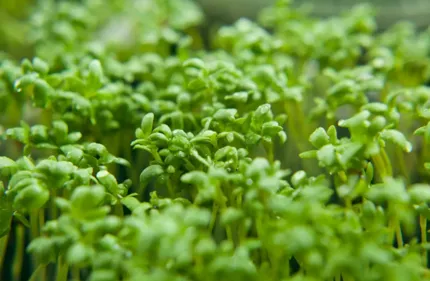
Spring! Finally! It has truly arrived! In this brief season, there is a type of food with a tasting period that is just as fleeting but must not be missed — sprouts. The term 'sprout vegetables' refers to the tender shoots and small seedlings that emerge when certain vegetables just begin to sprout, which can be categorized into 'sprouts' and 'seedlings.' The former typically includes edible parts such as the hypocotyl and cotyledons, like soybean sprouts, mung bean sprouts, and peanut sprouts. The latter encompasses true leaves or young plants directly consumed, such as pea shoots, radish seedlings, and wheatgrass.
In spring, it is highly recommended to consume more sprouts, not only for their delicious taste but also because they are 'super vitality ingredients'! Sprouts are often more nutritious than 'ordinary vegetables.' Multiple studies have found that the levels of active phytochemicals in sprouts are generally higher than in their mature forms. These compounds are known for their beneficial effects, including antioxidant properties, blood sugar regulation, and cancer prevention. For example, a study published in 2025 revealed that the total flavonoid content in amaranth sprouts exceeded that in microgreens and mature plants, displaying the strongest xanthine oxidase inhibition activity. However, the same study indicated that in terms of overall antioxidant capacity, sprouts do not perform as well as mature amaranth.
Another comprehensive study comparing 17 types of sprouts reported that vegetable-derived sprouts generally contain more phytochemicals and exhibit greater activity compared to grain sprouts. Among these, red carrot sprouts stood out with the highest levels of total phenols, glucosinolates, and anthocyanins, demonstrating the strongest antioxidant, blood sugar regulation, and cholesterol-lowering activities. Domestic research has also verified that the total phenol content in the sprouts of cruciferous vegetables is significantly higher than that of mature vegetables.
Certain nutrients are also found in higher amounts in sprouts. Seed germination constitutes a critical stage in the continuation of plant life. Just as a mother prioritizes delivering nutrients to her fetus, plants 'mobilize' essential nutrients within themselves during sprouting, enhancing their bioavailability while striving to 'suppress' anti-nutritional factors like oxalic acid and phytic acid. During this phase, consuming sprouted vegetables benefits us humans from this 'nutritional preferential treatment.' Research has indicated that radish sprouts have the highest protein content when compared to mature radishes and microgreens, along with higher dietary fiber. The vitamin C content in bean sprouts notably surpasses that of dried beans; for instance, mung bean sprouts contain nearly three times the vitamin C of whole mung beans. Additionally, studies have shown that lettuce sprouts possess greater mineral content of calcium, magnesium, iron, and zinc compared to mature lettuce.
However, some studies have reached different conclusions: Japanese researchers discovered that the total vitamin C content in mature broccoli and red cabbage outstrips that found in sprouts, with no significant difference in vitamin C content between sprouts and mature vegetables of water celery and mustard greens. One notable advantage of sprouts lies in their high water content. Research confirms that water content during the sprout stage of vegetables is higher than during both the mature and seed phases. Chinese Toon Seedlings are easy to grow, delicious, and pair excellently with various dishes.
If you wish to try growing sprouted greens at home, the following varieties are highly recommended for beginners due to their ease of cultivation, delightful taste, and excellent pairing options: 1. Bean sprouts (yellow bean sprouts, green bean sprouts, pea sprouts) are exceptionally high in vitamin C, easy to chew, and emit no strong odor, making them widely favored. They are perfect for those who typically consume fewer vegetables. Whether in salads, quickly stir-fried, or in soups, every preparation highlights their crispness and flavor.
Planting method: Choose good beans and place them in a bowl. Add enough water to cover them, cover the bowl with a damp cloth, and place it in a cool location. Water slightly each day, avoiding light, and within a few days, bean sprouts will grow. 2. Broccoli seedlings: Choosing fresh seeds from the current year, soak in warm water for 8 to 12 hours. Once sufficiently moist, sprinkle them evenly on a seedling tray lined with damp cheesecloth, ensuring adequate spacing. Cover with a damp cloth to block light and mist the seeds 2-3 times a day to maintain moisture. After 2 to 3 days, when seedlings appear, remove the cheesecloth, ensuring sufficient water remains in the tray, and continue misting daily while gradually increasing light exposure until harvestable at about 10 centimeters.
3. Purple cabbage seedlings: Similar to broccoli seedlings, the soaking time can be reduced to 6-8 hours. It can be served cold as a salad or quickly stir-fried with shredded meat. Adding assorted fruits to create a fruit salad is both visually appealing and delicious. You can also combine it with carrot strips, shredded eggs, and cucumber to prepare sushi rolls, enhancing both the color and nutritional value of the dish. 4. Buckwheat sprouts: The soaking time can similarly be shortened to 4-6 hours. A convenient preparation method involves chopping the buckwheat sprouts, mixing them with flour, eggs, and water to create a batter, and then flattening to make thin pancakes, offering a refreshing and nutritious breakfast.
Note: When growing sprouts at home, quality, fresh seeds must be selected, and the planting containers must be kept clean to prevent contamination of the seeds and sprouts.
References: [1] Fu Gui, Cao Jie, Zhu Fengzhi, Yin Mingyu, Fan Zhenyu. Research Progress on the Nutritional Value, Functional Characteristics, and Safety of Sprouts [J]. Food Science, 2025, 46(11): 394-404. Jambor, T., Knížatová, N., Valkova, V., Tirpák, F., Greifová, H., Kováčik, A., & Lukáč, N. (2022). Microgreens as a functional component of the human diet: a review. The Journal of Microbiology, Biotechnology and Food Sciences, e5870. Hasan, M., Sultana, M., & Lee, S. (2025). A comprehensive investigation from sprouts to microgreens and mature plants of Amaranthus viridis L. as a prospective natural inhibitor of xanthine oxidase enzyme. Discover Food, Vol. 5, no. 1, 119. Mahvash Afshari, Morteza Sadeghi, Md Faruk Ahmed, Sanghyeob Lee, Comprehensive assessment of phytochemicals and bioactivities in various sprouts, Food Bioscience, Volume 62, 2024, 105486, ISSN 2212-4292.
Guo Liping, Wang Zhiying, Fan Xia, et al. (2017). A Comparison of Phytochemical Content and Antioxidant Activity Between Several Brassica Sprouts and Mature Vegetables. Journal of Nutrition, 39(5), 490-494. Farzana Siddique, Sana Imtiaz, Aqsa Khizar, Saima Noreen, Izza Faiz Ul Rasool, Prashant Kumar, Andres Moreno, Waseem Khalid, Tuba Esatbeyoglu, Nutritional Importance and Value-added Application of Sprouts: Worldwide Awareness Toward Introducing New Food, Journal of Agriculture and Food Research, 2026, 102838, ISSN 2666-1543. [7]Kajszczak, D.; Sosnowska, D.; Bonikowski, R.; Szymczak, K.; Frąszczak, B.; Pielech-Przybylska, K.; Podsędek, A. Comparative Nutrient Study of Raphanus sativus L. Sprouts, Microgreens, and Roots. Agronomy 2025, 15, 1216. Ebert AW, Chang CH, Yan MR, Yang RY. Nutritional composition of mungbean and soybean sprouts compared to their adult growth stage. Food Chemistry. 2017;237:15-22.
Pinto, E., Almeida, A. A., Aguiar, A. A., & Ferreira, I. M. (2015). Comparison between the mineral profile and nitrate content of microgreens and mature vegetables. Journal of Food Composition and Analysis, 37, 38-43. Moriya Michie, Yuuko Ohba. (2004). Vitamin C content, radical scavenging activity, and cooking properties of sprout varieties. Journal of the Japanese Home Economics Association, 55(2), 131-136. Pang Li, Li Ying, Li Peng, Zhang Jingbo, Hu Xia. The Effect of Storage Conditions on the Detection of Nitrate Content in Chinese Toon [J]. Food Safety Guide, 2021(29): 84-86. Juliana Delvizio Vidal, Carolina Beres, Flavia Oliveira Brito, Lilia Zago, Roberta Fontanive Miyahira, Unlocking the functional potential of sprouts: A scientific exploration on simulated gastrointestinal digestion and colonic fermentation, Journal of Functional Foods, Volume 117, 2024, 106235, ISSN 1756-4646.
#nutritional diet
#green food

© 2025 Health Tribe.