
How can improper preparation of green beans and daylilies lead to poisoning?
Apr 05, 2026
Author: Unknown, Reviewer: Unknown, Curator: Unknown, Production/Organizational Information: Unknown.
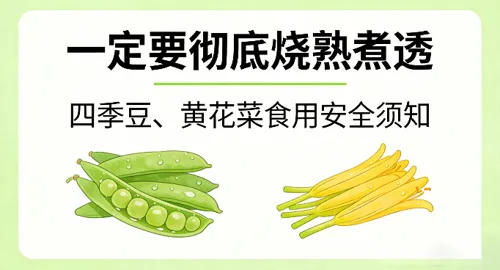
On daily dining tables, green beans and fresh daylilies are common ingredients known for their tender texture and rich nutrition. However, when these foods are not cooked properly or are undercooked, they can easily lead to food poisoning, causing discomfort in the body. Many people wonder why these ordinary vegetables can be toxic when not fully cooked. The core reason lies in the natural toxins contained in these ingredients and whether thorough heating can effectively break down these toxins.
1. Green beans: Not fully cooked, two types of natural toxins are causing trouble.
Green beans (also known as cowpeas, bean pods, or kidney beans) are non-toxic by themselves, but they contain two natural substances, saponins and lectins, which can be pathogenic if not cooked properly.
Saponins: Mainly concentrated in the outer skin of the pods, they can irritate the gastrointestinal mucosa, leading to localized congestion and swelling in the stomach and intestines, and may even cause hemorrhagic inflammation, resulting in symptoms such as nausea, vomiting, abdominal pain, and diarrhea.
Lectins: Commonly found in legumes, they can damage red blood cells, trigger coagulation reactions, and stimulate severe vomiting, which may also be accompanied by dizziness, palpitations, cold sweats, and numbness in the limbs.
These two substances share a common characteristic—they are not heat-resistant and can be destroyed by prolonged high-temperature heating. If the cooking is done quickly with high heat aiming for a crisp texture, and the heating time is insufficient (less than 15-20 minutes), the toxins cannot be fully broken down, leading to potential poisoning. The incubation period for poisoning is short, typically occurring within half an hour to four hours after consumption, with symptoms primarily involving gastrointestinal discomfort. In severe cases, dehydration and confusion may occur.
2. Fresh daylily: non-toxic by itself, but becomes highly toxic after transformation within the body.
Fresh daylily (golden needles) itself does not contain direct toxicity from colchicine, but once ingested, it gets absorbed in the gastrointestinal tract and is converted into a highly toxic compound called demecolcine during the oxidation process.
The plant "two autumn daylilies" contains a strong irritant that affects the gastrointestinal and respiratory systems. Adults consuming 50-100 grams of fresh daylily flowers may experience poisoning. Symptoms of poisoning can include dry throat, nausea, vomiting, abdominal pain, and diarrhea. In severe cases, there may also be muscle pain, numbness in the hands and feet, and blood in the urine, potentially putting one's life at risk.
Colchicine is easily soluble in water and is sensitive to high temperatures. Proper handling can significantly reduce its content. However, in daily cooking, merely rinsing or briefly frying is not enough to completely eliminate colchicine, which still presents a risk of poisoning after consumption.
3. Key to Safe Consumption: Cook Thoroughly and Handle Properly.
Safe ways to eat green beans.
Before cooking, remove the ends and the stringy fibers of the beans, as these parts contain higher levels of toxins and the fibers are coarse and hard to digest.
2. Avoid quick stir-frying or cold mixing; prioritize blanching before stir-frying or stew, ensuring continuous heating for at least 20 minutes.
3. Cook until the green beans are no longer raw and pungent, and have a soft texture; make sure they are fully cooked before consuming.
Safe Ways to Eat Fresh Daylilies.
1. It is preferable to choose dried daylilies, as a significant amount of colchicine will be lost during the drying process, making it safer.
2. Fresh produce must have the flower buds removed first (the area where toxins are concentrated). Blanch in boiling water, then soak in clean water for 2-3 hours (changing the water halfway), and finally, cook thoroughly until well-done.
The recommended single serving should not be excessive, and it is advised to keep fresh products under 50 grams.
What should I do if I feel unwell?
If symptoms of suspected poisoning such as nausea, vomiting, abdominal pain, or diarrhea occur after consumption, one should immediately stop eating the remaining food and seek medical attention as soon as possible. Do not take measures such as inducing vomiting or administering laxatives on your own, as improper handling may exacerbate bodily harm or delay treatment. When seeking medical help, it is advisable to inform the healthcare provider about the types of food consumed to facilitate timely and appropriate treatment.
#health
#food safety


© 2025 Health Tribe.