
WHO and France Launch High Impact One Health Initiatives
Apr 07, 2026

On World Health Day, global leaders convened in France for a significant "One Health Summit," during which the World Health Organization (WHO) and its partners unveiled a series of concrete actions aimed at better safeguarding people, animals, and the planet from impending health crises.
Hosted by France, the Summit represents a significant advancement in translating the One Health approach—acknowledging the deep interconnections between human health, animal health, and the environment—into concrete actions. The theme of this year’s World Health Day, "Together for health. Stand with science," established the framework for the announcements made.
The urgency could not be clearer. Climate change, environmental degradation, unsafe food, water contamination, biodiversity loss, and unequal access to health care are among the most pressing challenges facing the world today. About 60% of known infectious diseases in humans originate in animals, and around 75% of emerging infectious diseases are zoonotic. The COVID-19 pandemic alone resulted in an estimated 15 million deaths and caused trillions of dollars in economic losses globally in 2020-2021.
To prevent the next crisis before it begins, the WHO and global partners are enhancing the One Health approach by uniting experts from health, agriculture, environment, and science to detect risks sooner and respond more swiftly.
"The health of people, animals, and the environment we share are inextricably interwoven, and we cannot protect one without protecting all three," said Dr. Tedros Adhanom Ghebreyesus, Director-General of WHO. "The One Health approach brings together expertise to work across silos and sectors to prevent and respond to threats more effectively. WHO thanks France for hosting this Summit, and we remain committed to working with partners and countries to turn commitment into action and accelerate global progress for humans, animals, and our planet."
As host of the One Health Summit, France reaffirmed its leadership and commitment to advancing One Health, promoting international cooperation, fostering global scientific partnerships, and driving practical solutions forward.
“One Health is not just about protecting health; it is about recognizing that we live as one system, where the well-being of humans, animals, and the environment is inseparable,” said Emmanuel Macron, President of the Republic of France. “France is determined to move One Health from ambition to implementation, working with the World Health Organization and our global partners to prevent the next crisis before it begins. Science must guide our action, and cooperation must be our strength.”
Bringing together heads of state, ministers, experts, and policymakers, the summit highlighted how coordinated efforts strengthen international dialogue and mobilize public and private partners toward a common goal. The outcomes of the summit will inform ongoing international discussions—including the G7—on preparedness and coordinated responses to health threats at the human, animal, and ecosystem interface.
Joining forces with global partners, the WHO has outlined the following specific actions:
WHO and the One Health Quadripartite partners (the Food and Agriculture Organization, the United Nations Environment Programme, and the World Organisation for Animal Health) are planning to launch a new Global Network of One Health Institutions to achieve the goals of the One Health Joint Plan of Action.
This new initiative is designed to mobilize multidisciplinary expertise and provide stronger, more coordinated support to countries. It will enhance the translation of global guidance into practical tools and on-the-ground support, strengthening training and peer learning through the WHO Academy and other relevant institutions, creating a clearer, country-focused delivery model for One Health implementation.
WHO and Quadripartite partners announced the extension and expansion of the One Health High-Level Expert Panel (OHHLEP), the world’s leading scientific advisory body on One Health. Its mandate will now run through 2027, with a new phase planned for 2027-2029, reinforcing its role in three priority areas: shaping the global research agenda, supporting the One Health Joint Plan of Action, and driving high-level advocacy grounded in science and evidence.
WHO, the World Organisation for Animal Health, and the Institut Pasteur have launched a renewed global initiative aimed at eliminating dog-mediated human rabies deaths by 2030. This disease continues to claim nearly 60,000 lives annually, with a significant number of victims being children. The initiative, led by countries where rabies is endemic, will enhance and strengthen political commitment, as well as community-based surveillance and research. It will utilize rabies elimination as a model to bolster broader One Health surveillance and preparedness systems.
WHO and Quadripartite partners introduced a new Strategic Framework for Collaboration on avian influenza. This framework enhances coordination in areas such as surveillance, risk assessment, preparedness, and response, allowing countries to move from isolated actions to a cohesive One Health strategy. It aims to address the broader effects of avian influenza on public health, food security, livelihoods, and biodiversity.
WHO is also taking on the Chairmanship of the Quadripartite collaboration, enhancing its leadership role for coordinated global action in partnership with FAO, WOAH, and UNEP. Under WHO's Chairmanship, the Quadripartite partnership will focus on delivering measurable impacts at the country level, streamlining governance, and aligning efforts around a concentrated set of high-impact priorities, while also strengthening advocacy, setting norms, and generating evidence.
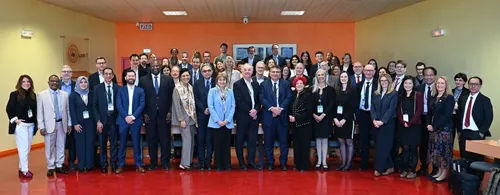
Alongside the Summit, the WHO is launching its first Global Forum of WHO Collaborating Centres (CCs), scheduled for April 7-9. The Forum will bring together high-level representatives, including the Minister of Health of France, ministers from Germany, Indonesia, and South Africa, as well as the Vice-Minister of Health of Japan, along with more than 800 WHO CCs from over 80 countries.
The Global Forum will act as a progressive platform aimed at enhancing collaboration among top academic and research institutions globally, accelerating scientific innovation, facilitating data sharing, coordinating research efforts, and fostering capacity building.
Both the One Health Summit and the Global Forum of WHO Collaborating Centres convey a clear message: addressing today’s intricate health challenges requires stronger multilateral cooperation, increased investments in science, and ongoing efforts to implement the One Health approach into tangible actions both globally and locally.
#public health
#international cooperation


© 2025 Health Tribe.