
R&D Roadmaps for Pathogen Families Enhance Global Pandemic Readiness
Apr 07, 2026
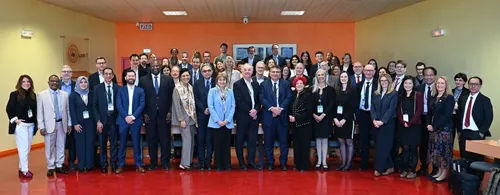
In support of efforts to ensure that safe and effective diagnostics, treatments, and vaccines are ready for distribution before the next pandemic occurs, the WHO, in collaboration with partners, launched research and development roadmaps for ten groups of viruses and bacteria today.
The roadmaps were launched at an event co-hosted by ANRS Emerging Infectious Diseases, the Coalition for Epidemic Preparedness Innovations (CEPI), the World Health Organization (WHO), and partners during the One Health Summit in Lyon, France.
The event emphasized how a One Health and Pathogen Family-based approach can enhance epidemic and pandemic preparedness, particularly through WHO’s Collaborative Open Research Consortia (CORCs), which unite global research communities focusing on priority viral families and key bacterial threats.
“CORCs are turning global scientific collaboration for pandemics into a more durable decentralized and inclusive R&D preparedness architecture,” said Dr. Sylvie Briand, Chief Scientist of WHO. “By organizing efforts around pathogen families and embedding One Health, we can better anticipate risks and accelerate the R&D of countermeasures before the next crisis. WHO thanks the CORC leads for their invaluable scientific leadership and for coordinating the development of the Family R&D Roadmaps that we are launching today.”
Partners emphasized the importance of translating the Family R&D research roadmaps released today into concrete actions to support faster responses to emerging threats and to meet CEPI’s goal of developing safe and effective vaccines in as little as 100 days.
“We don’t know what the next pandemic threat will be, or when it will strike,” said Dr. Richard Hatchett, Chief Executive Officer at CEPI. “That’s why focusing on entire pathogen families can help us stay ahead of both known risks and emerging threats. That concept is at the heart of CEPI’s work, which aligns with and supports the World Health Organization CORCs. CEPI actively contributes to the CORC’s roadmaps to advance collaboration and target the viral families most likely to spark a pandemic, turning R&D priorities into real-world plans that stop outbreaks early.”
The event also showcased work led by ANRS Emerging Infectious Diseases on the filoviridae family, illustrating how national and regional leadership can strengthen global preparedness.
"France is committed to advancing pandemic preparedness through science, solidarity, and long-term partnership," said Professor Yazdan Yazdanpanah, Director of ANRS Emerging Infectious Diseases. "The work on entire pathogen families led by global institutions, including the filoviridae roadmap coordinated by ANRS MIE, demonstrates how national efforts can contribute to a stronger international capacity to detect threats earlier and prepare more effectively.
The CORCs Leads and other speakers at the event emphasized the need for continuous political commitment, funding, and international collaboration to sustain the momentum for One Health-informed research and development roadmaps and their implementation across countries and regions worldwide.
Each CORC has spearheaded the creation of family-specific research and development roadmaps through organized scientific OPEN consultations that encompass pathogen biology, animal reservoirs and vectors, epidemiology and surveillance, basic and translational research, development of medical countermeasures with regulatory considerations, and assessment of candidate medical countermeasures in outbreak or pandemic situations.
Find here the links to each of the Family R&D Roadmaps.
To implement the pathogen-family prioritization approach for epidemic and pandemic preparedness, the WHO and several prominent research institutions globally have initiated the Collaborative Open Research Consortia (CORC), an international network of networks focused on priority pathogen families. Each CORC is coordinated by leading institutions serving as hubs and conveners.
These consortia represent significant progress in the scientific approach, transitioning from a centralized, pathogen-specific model to a decentralized, collaborative framework aimed at anticipating emerging threats and expediting the research and development of medical countermeasures.
The CORC serves as the main framework for creating and implementing the R&D Roadmaps. They offer a systematic approach to bridging significant knowledge gaps across various regions and scientific disciplines. The governance framework of the CORC, particularly its focus on open and fair participation and representation, provides valuable insights for designing more inclusive and transparent mechanisms.
The CORC, hosted by public institutions worldwide, already involves thousands of scientists and stakeholders globally and exemplifies a non-extractive, partnership-based approach that supports the principles underpinning the aims of the Pandemic Agreement.
A French national agency dedicated to research on HIV, viral hepatitis, sexually transmitted infections, and emerging infectious diseases. Hosted by Inserm, it supports and coordinates multidisciplinary research, fosters international collaborations, and contributes to strengthening scientific and operational preparedness for epidemics and pandemics, including through work on pathogen family roadmaps and One Health-oriented approaches.
CEPI is a global partnership that brings together public, private, philanthropic, and civil organizations. Its mission is to expedite the development of vaccines and other biological countermeasures against epidemic and pandemic threats, ensuring their availability to all in need. A key component of CEPI’s strategy to combat pandemics is the '100 Days Mission,' aimed at creating safe, effective, and accessible vaccines against emerging threats within just 100 days. CEPI is seeking $2.5 billion to implement CEPI 3.0, its strategy for 2027-2031, which intends to systematically decrease the likelihood, impact, and cost of epidemics and pandemics by turning the 100 Days Mission into a functional reality.
The WHO is the specialized agency of the United Nations responsible for directing and coordinating international health within the UN system, working with Member States and partners to prevent, detect, and respond to public health threats, strengthen health systems, and advance universal health coverage and health equity worldwide. It develops global norms and standards, provides technical guidance, and supports countries in building resilient capacities for epidemic and pandemic preparedness and response.
UK Health Security Agency (UKHSA)
arena.corc@ukhsa.gov.uk
Bacteria Pathogens
Vibrio cholerae, Yersinia pestis, Shigella dysenteriae, non-typhoidal Salmonella enterica, Klebsiella pneumoniae.
Aga Khan University & London School of Hygiene & Tropical Medicine (LSHTM)
rdblueprint@who.int
Pakistan / United Kingdom
Sub-families: Hantaviridae, Nairoviridae, Peribunyaviridae, Phenuiviridae
UK Health Security Agency (UKHSA) in collaboration with SCARDA and Institut Pasteur de Dakar (IPD)
bunya.corc@ukhsa.gov.uk
UK / Japan / Senegal
Programme for Research in Epidemic Preparedness and Response (PREPARE)
ncid.corc.cov@nhghealth.com.sg
Singapore
National Agency for Research on AIDS and Emerging Infectious Diseases (ANRS-MIE)
Contact: ANRS-MIE CORC Page
France
Fiocruz Foundation
Contact: corc.flaviviridae@fiocruz.br
Brazil
Indian Council of Medical Research (ICMR)
rdblueprint@who.int
India
National Institute for Biomedical Research (INRB) & Wits Reproductive Health and HIV Institute (Wits RHI)
rdblueprint@who.int
DRC / South Africa
#public health
#international cooperation


© 2025 Health Tribe.